Introduction
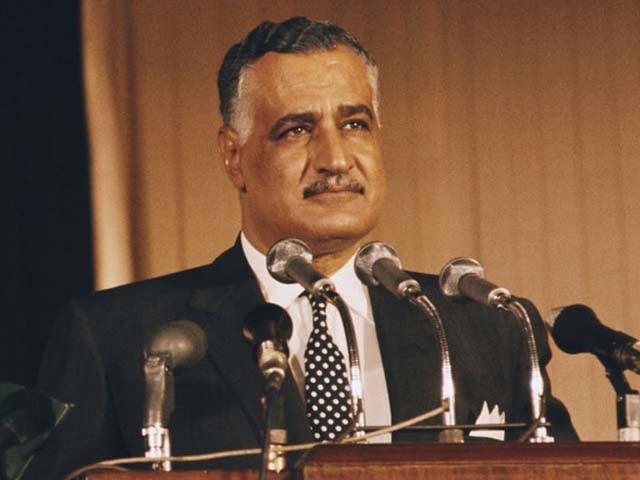
In 1958, a major political experiment took shape in the Middle East when Egypt and Syria united to form the United Arab Republic (UAR). At the centre of this historic union was Gamal Abdel Nasser, who became the first President of the United Arab Republic. This event marked a high point of Pan-Arab nationalism and reflected the desire for Arab unity during the Cold War era.
Formation of the United Arab Republic
Political instability and fear of communist influence in Syria led Syrian leaders to seek union with Egypt. After negotiations, Egypt and Syria officially merged on 1 February 1958, forming the United Arab Republic.
On 5 February 1958, Gamal Abdel Nasser was nominated and confirmed as President of the UAR, with Cairo as its capital. The new state aimed to create a single Arab nation with unified political, military, and economic systems.
Goals of the United Arab Republic
The UAR was founded on ambitious ideals, including:
• Political unity of Arab states
• Resistance to Western domination
• Promotion of Arab socialism
• Strengthening Arab identity
Many believed the UAR would become the first step toward a larger pan-Arab state including other Arab nations.
Challenges and Decline
Despite widespread enthusiasm, the United Arab Republic soon faced serious problems:
• Syrian leaders felt marginalized by Egypt’s centralized control
• Economic policies favored Egypt over Syria
• Cultural and administrative differences caused dissatisfaction.
In 1961, just three years after its formation, a military coup in Syria ended the union. Syria withdrew, and the United Arab Republic dissolved, although Egypt continued to use the name until 1971.
Historical Significance
Although short-lived, the United Arab Republic was highly significant:
• It represented the strongest attempt at Arab political unity
• It highlighted both the potential and difficulties of regional integration
• It cemented Nasser’s legacy as the leading figure of Arab nationalism
The UAR remains a powerful symbol of Arab aspirations during the Cold War period.
Conclusion
Gamal Abdel Nasser’s presidency of the United Arab Republic in 1958 marked a bold experiment in Arab unity. While the union ultimately failed, its vision influenced Middle Eastern politics for decades. The UAR stands as a reminder that shared identity alone is not enough — successful unity also requires balanced governance, mutual trust, and inclusive leadership.