30 May 1955: Death of Narayan Malhar Joshi, Pioneer of the Indian Labor Movement
10 February 1949 marks an important moment in the history of India’s labour movement. On this day, Narayan Malhar Joshi, one of the earliest and most influential leaders of Indian trade unionism, passed away. His lifelong efforts laid the foundation for workers’ rights and organised labour in India during the colonial period and after independence.
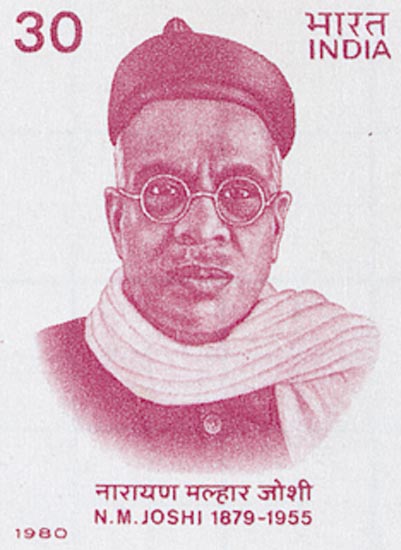
Early Life and Background
Narayan Malhar Joshi was born in 1879 in Maharashtra. From a young age, he was deeply influenced by social reform movements and the growing demand for justice and equality in Indian society. Unlike many leaders of his time who focused solely on political freedom, Joshi believed that economic justice and workers’ welfare were equally important for true independence.
Contribution to the Indian Labor Movement
Joshi played a crucial role in organising workers at a time when industrial labour in India faced harsh conditions, long working hours, low wages, and no legal protection.
His major contributions include:
- Founding the All-India Trade Union Congress (AITUC) in 1920
- Becoming one of its first presidents
- Advocating peaceful negotiation instead of violent agitation
- Promoting cooperation between workers, employers, and the government
Joshi believed that trade unions should be disciplined, responsible, and constructive, focusing on long-term welfare rather than short-term confrontation.
Role in Lawmaking and Politics
Narayan Malhar Joshi also served as a member of the Central Legislative Assembly, where he raised workers’ issues at the national level. He was instrumental in pushing for:
- Labour welfare laws
- Better working conditions in factories
- Recognition of trade unions
- Social security measures for workers
His efforts helped shape early labor legislation in India.
Philosophy and Leadership Style
Unlike radical labour leaders, Joshi followed a moderate and constitutional approach. He believed that workers’ rights could be secured through dialogue, legislation, and mutual understanding.
This approach earned him respect not only among workers but also among employers and British administrators. His leadership helped the labor movement gain legitimacy and stability in its formative years.
Death and Legacy
Narayan Malhar Joshi passed away on 10 February 1949, just two years after India gained independence. Although he did not live long enough to see the full development of labour laws in independent India, his influence remained strong.
His legacy includes:
- The foundation of organised trade unionism in India
- A balanced approach to labour relations
- Inspiration for future labour leaders and reformers
Today, he is remembered as one of the architects of India’s labour movement.
Historical Importance
The death of Narayan Malhar Joshi marked the end of an era in Indian labour history. His work ensured that the voices of workers were heard at a national level and that labour rights became an essential part of India’s democratic framework.
Conclusion
Narayan Malhar Joshi’s life was dedicated to improving the dignity, rights, and working conditions of Indian workers. His death on 30 May 1955 was a great loss to the nation, but his ideas and contributions continue to guide India’s labor policies even today.
He remains a symbol of peaceful reform, social justice, and responsible leadership in Indian history.