Building a Safer and Smarter Digital World
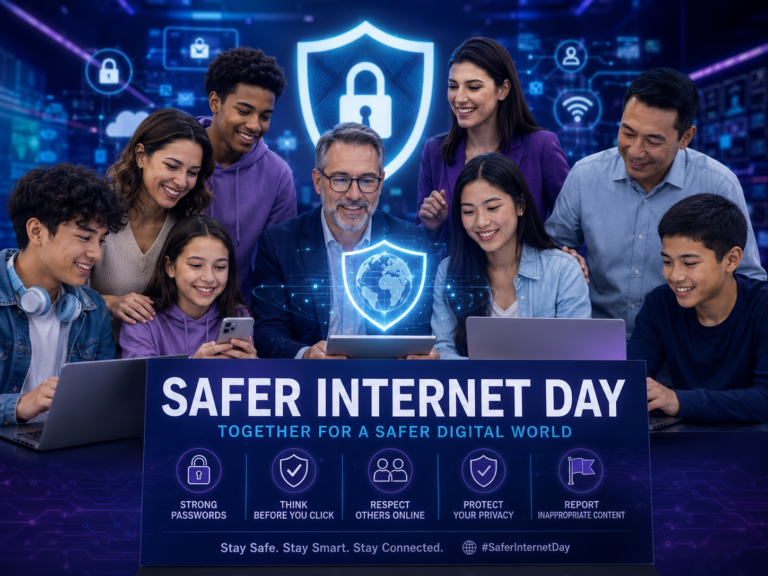
Safer Internet Day is observed every year to spread awareness about using the internet safely, responsibly, and positively. In today’s world, the internet has become an important part of our daily life. We use it for learning, communication, entertainment, online shopping, banking, business, and social media. It has made life easier and faster, but at the same time, it also brings risks such as cyberbullying, online fraud, data theft, misinformation, and privacy issues.
The main purpose of Safer Internet Day is to remind everyone that online safety is not only the responsibility of technology companies or governments. It is the responsibility of every internet user. Whether we are students, parents, teachers, professionals, or business owners, we all need to understand how to protect ourselves and others in the digital world
Protect Your Personal Information
One of the most important rules of internet safety is to protect your personal information. Many people share details such as phone numbers, addresses, school names, passwords, and personal photos without thinking about the consequences. Once something is posted online, it can be difficult to remove completely.
To stay safe, never share sensitive information with unknown people or websites. Use strong passwords and avoid using the same password for every account. A strong password should include letters, numbers, and special characters. It is also a good idea to enable two-factor authentication wherever possible because it adds an extra layer of security.
Think before You Click
Many online scams happen because people click on suspicious links or download unknown files. Cybercriminals often send fake emails, messages, or advertisements that look real. These messages may claim that you have won a prize, your account is blocked, or you need to verify your details immediately.
Before clicking any link, check whether the source is trusted. Do not open attachments from unknown senders. If a message creates fear or pressure, take a moment to verify it. Being careful can protect you from phishing attacks, malware, and online fraud.
Be Kind and Responsible Online
The internet should be a place where people feel respected and safe. Unfortunately, cyberbullying and online hate are common problems. Many people forget that there is a real person behind every screen. Hurtful comments, fake rumours, and negative messages can deeply affect someone’s mental health.
Safer Internet Day teaches us to be responsible digital citizens. We should use kind words, respect different opinions, and avoid sharing harmful content. If we see cyberbullying, we should not support it. Instead, we can report it, block the user, or help the person being targeted.
Identify Fake News and Misinformation
The internet gives us access to unlimited information, but not everything we see online is true. Fake news, edited images, and misleading videos can spread quickly. Many people share content without checking the facts, which can create confusion and panic.
Before sharing any news or information, check the source. Reliable websites, official pages, and trusted news platforms are better sources of information. If something looks shocking or too good to be true, verify it first. Responsible sharing helps make the internet more trustworthy.
Keep Children Safe Online
Children are using the internet more than ever for education, games, videos, and social interaction. While the internet can help them learn and grow, it can also expose them to inappropriate content, strangers, and online addiction.
Parents and teachers should guide children about safe internet habits. They should talk openly about online risks and encourage children to report anything uncomfortable. Using parental controls, setting screen-time limits, and teaching children not to talk to stranger’s online can help create a safer environment.
Balance Online and Offline Life
Internet safety is not only about passwords and privacy. It is also about digital wellbeing. Spending too much time online can affect sleep, studies, work, and mental health. Social media can sometimes create pressure, comparison, and stress.
A healthy digital life means using the internet with balance. Take breaks from screens, spend time with family and friends, and focus on real-life activities. Technology should support our life, not control it.
Report and Block Harmful Content
Most social media platforms and websites provide tools to report harmful content, fake accounts, scams, or abuse. Many users ignore these tools, but reporting is important. It helps platforms take action and protect other users.
If you experience harassment, fraud, or suspicious activity online, do not stay silent. Block the person, save proof if needed, and report the issue. In serious cases, contact local cybercrime authorities.
Conclusion
Safer Internet Day is a reminder that the internet can be powerful, useful, and positive when we use it wisely. A safer internet begins with awareness, kindness, and responsibility. By protecting our personal information, thinking before clicking, respecting others, checking facts, and guiding children, we can create a better digital world for everyone.
The internet connects millions of people across the world. It gives us opportunities to learn, work, create, and communicate. But with these opportunities comes responsibility. On Safer Internet Day, let us promise to become smarter, safer, and more responsible internet users. A safe internet is not built in one day; it is built every day through our choices, actions, and behaviour online.