Introduction
The International Day of Women and Girls in Science is observed every year on 11 February to celebrate the achievements of women in science and to inspire the next generation of girls to pursue careers in STEM (Science, Technology, Engineering, and Mathematics).
Science is the engine of human progress – from life-saving vaccines to revolutionary technologies that power our daily lives. Yet, for far too long, half of humanity’s brainpower has remained underutilized. This day is not just a celebration; it is a powerful reminder that we cannot solve the complex challenges of tomorrow with only half the world’s talent.
The Persistent Gender Gap
Despite notable progress, a significant gender gap still exists in many scientific fields. While women now outnumber men in some life sciences programs, they remain heavily underrepresented in high-impact areas such as artificial intelligence, physics, aerospace engineering, and computer science.
The problem begins early. Societal stereotypes, implicit biases, and lack of visible role models quietly discourage girls from pursuing STEM subjects long before they reach university. The message “math and science are for boys” still lingers in many homes and classrooms, creating invisible barriers that limit dreams.
Why Diversity in Science Matters
Diversity is not just a matter of fairness – it is a prerequisite for better science.
When women are excluded from research and development, the consequences can be serious:
- Crash test dummies were historically based only on the average male body, resulting in higher injury rates for women in car accidents.
- Early voice recognition systems struggled with female voices because they were trained mostly on male data.
- Heart disease symptoms were long misunderstood in women because research was primarily conducted on men.
Women bring unique perspectives, lived experiences, and priorities to research. Their participation leads to more inclusive medicine, innovative solutions for climate change, ethical development of AI, and community-focused sustainable technologies.
True innovation happens at the intersection of different perspectives.
Inspiring Women Scientists
History and the present are full of extraordinary women who have broken barriers:
- Marie Curie – First woman to win a Nobel Prize, and the only person to win Nobel Prizes in two different scientific fields for her work on radioactivity.
- Katherine Johnson – NASA mathematician whose calculations were critical to the success of America’s first space missions.
- Kalpana Chawla – First woman of Indian origin in space, who inspired millions with her courage and determination.
- Dr. Kizzmekia Corbett – Immunologist who played a key role in developing the mRNA COVID-19 vaccine.
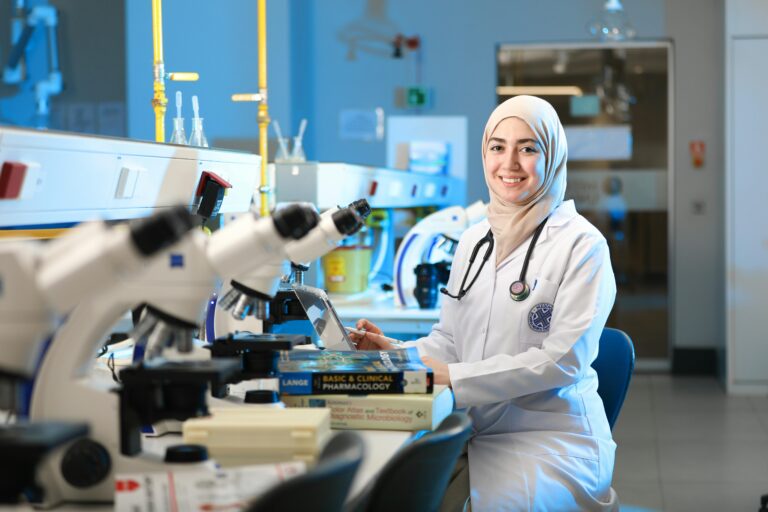
These women prove that science has no gender. Their stories must be told loudly and often so that every young girl can see herself in a lab coat or leading a research team.
Challenges That Still Remain
Women and girls continue to face multiple obstacles:
- Limited access to quality STEM education in many regions
- Stereotypes and societal pressure
- Lack of female role models and mentors
- Workplace discrimination, unequal pay, and rigid cultures that make it difficult to balance career and family
- Bias in hiring, promotion, and funding decisions
The Way Forward: A Call to Action
Creating real change requires more than inspiration – it demands structural action:
- Early Encouragement – Make STEM education engaging and accessible for girls from primary school onwards through hands-on learning, coding clubs, robotics, and science fairs.
- Strong Mentorship – Connect girls with successful women scientists who can guide and support them.
- Supportive Workplaces – Implement equal pay, flexible work policies, bias-free recruitment, and family-friendly environments.
- Visibility – Celebrate and highlight women scientists in textbooks, media, and public platforms.
- Investment – Governments, institutions, and organizations must increase scholarships, research funding, and STEM initiatives specifically targeted at girls and women.
Technology and online platforms have made quality education more accessible than ever. We must use this opportunity to reach girls in every corner of the country and the world.
Conclusion
The future of humanity – fighting climate change, curing diseases, advancing artificial intelligence, and building a sustainable world – depends on all of us.
On this International Day of Women and Girls in Science, let us recommit to removing barriers and opening doors. When we empower women and girls in science, we don’t just create better scientists – we create a brighter, smarter, and more equitable future for everyone.
Science belongs to everyone. Every girl deserves the chance to dream, explore, invent, and lead.