A Detailed Look at the First Nuclear Test of 13 February 1960
On 13 February 1960, France carried out its first successful nuclear weapons test, officially becoming the fourth nuclear power in the world. The test took place in the Sahara Desert, then part of French-controlled Algeria, and marked a major turning point in both French history and global Cold War politics.
This event not only demonstrated France’s growing scientific and military capability, but also reshaped its position on the world stage.
Historical and Political Background
After World War II, nuclear weapons became symbols of ultimate power. The United States, Soviet Union, and United Kingdom had already tested nuclear bombs, leaving France concerned about its strategic vulnerability.
Under the leadership of Charles de Gaulle, France pursued an independent defense policy. De Gaulle believed that relying on allies-especially NATO and the United States-would weaken French sovereignty. His vision was clear:
France must possess its own nuclear deterrent, known as force de frappe.
This ambition led to massive investment in nuclear research, weapons design, and testing infrastructure.
The Nuclear Test: “Gerboise Blue”
The test, code-named Gerboise Blue (Blue Jerboa), was conducted near Regan, deep in the Algerian Sahara. It was organized by the French Atomic Energy Commission, France’s leading nuclear research authority.
Key technical details
• Date: 13 February 1960
• Location: Regan Test Site, Sahara Desert
• Yield: ~70 kilotons
• Type: Atmospheric nuclear explosion
The explosion was significantly more powerful than the atomic bombs dropped on Hiroshima and Nagasaki. Scientists and military officials viewed the test as a clear success, proving that France had mastered nuclear weapons technology.
Scientific and Military Significance
From a scientific standpoint, the test validated years of research in:
Nuclear physics
Weapons engineering
Detonation control
Radiation measurement
Militarily, it transformed France into a strategic power capable of deterring potential enemies. Nuclear capability gave France a stronger voice in international diplomacy and security discussions during the Cold War.
Environmental and Human Consequences
Despite its strategic success, the test had serious negative consequences.
Environmental impact:
• Radioactive fallout contaminated large areas of the desert
• Long-term soil and air radiation persisted
Human impact:
- Local populations were exposed to radiation
- French soldiers and workers at the test site later reported health problems
- Limited safety measures were used at the time
Decades later, France faced international criticism and legal pressure to acknowledge the damage and compensate affected individuals.
Global and Cold War Impact
France’s nuclear test intensified the global arms race and increased concerns about nuclear proliferation. At the same time, it strengthened France’s independence from both the US and the Soviet Union.
The test contributed to global awareness of nuclear dangers and indirectly encouraged future agreements aimed at controlling nuclear weapons, including test-ban efforts.
After Algeria: Shift in Testing Sites
After Algeria gained independence in 1962, France moved its nuclear testing program to the Pacific Ocean, particularly French Polynesia, where it continued testing for several decades-again sparking environmental and political controversy.
International Reaction: What Different Countries Said About France’s First Nuclear Test (1960)
After France conducted its first nuclear test on 13 February 1960, reactions from around the world were mixed. While some countries viewed the test as a strategic development during the Cold War, others strongly criticized it for increasing global nuclear risks.
France /-
France described the test as essential for national security and independence.
French leaders stated that nuclear capability would allow the country to defend itself without relying on foreign powers. The government presented the test as a major scientific and military achievement.
United States /-
The United States gave a cautious and reserved response.
While the U.S. did not openly celebrate the test, it quietly accepted France’s entry into the nuclear club as part of the Cold War power balance among Western allies.
United Kingdom /-
The United Kingdom, already a nuclear power, reacted calmly.
British officials acknowledged France’s technological progress and viewed the development as strengthening Europe’s overall defence capability.
Soviet Union /-
The Soviet Union expressed concern and criticism.
Soviet leaders warned that the addition of another nuclear power would increase global tension and further intensify the nuclear arms race.
Non-Aligned Countries /-
Many non-aligned and developing nations, including countries in Asia and Africa, strongly criticized the test.
They argued that nuclear weapons posed a serious threat to world peace and that nuclear testing endangered human life and the environment.
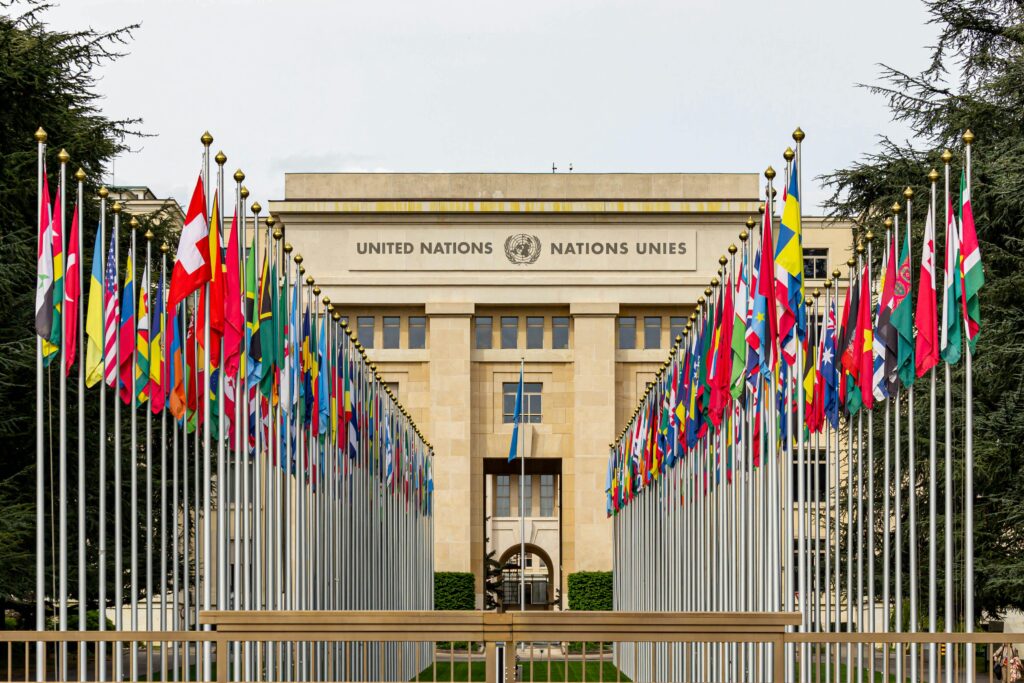
United Nations /-
Within the United Nations, the test sparked renewed debate about nuclear proliferation and disarmament.
Several member states called for stricter controls on nuclear testing and emphasized the need for international agreements to limit nuclear weapons.