Israel: History, Politics, Economy, and Global Impact
Israel is a small, yet highly influential country located in the Middle East. Despite its limited size, it plays a major role in global politics, security, religion, and technology. Since its establishment in 1948, Israel has remained at the center of international attention due to its strategic location, historical significance, and ongoing regional conflicts.
Geography and Location
Israel is situated on the eastern coast of the Mediterranean Sea. It shares borders with Lebanon to the north, Syria to the northeast, Jordan to the east, and Egypt to the southwest. This strategic position makes Israel geopolitically significant, especially in Middle Eastern affairs.
The country has diverse geography. Coastal areas experience a Mediterranean climate, while the southern region is largely deserted, including the Negev Desert. Despite limited natural resources, Israel has successfully developed advanced agricultural techniques to thrive in dry conditions.
Historical Background
Modern Israel was established on May 14, 1948, following the end of the British Mandate and the United Nations Partition Plan of 1947. Immediately after declaring independence, Israel faced war with neighboring Arab states. This marked the beginning of decades of regional conflict.
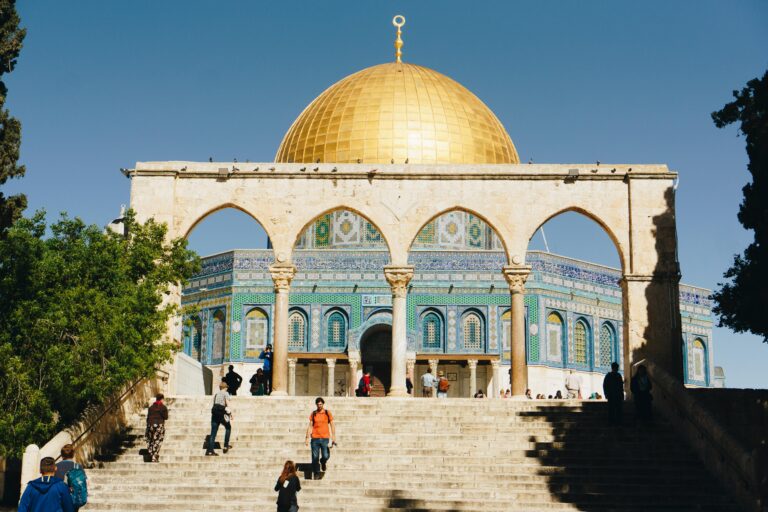
One of the most significant events in Israel’s history was the Six-Day War in 1967, during which Israel gained control of the West Bank, Gaza Strip, East Jerusalem, and other territories. The status of these territories remains one of the central issues in the ongoing Israeli Palestinian conflict.
Efforts toward peace have been made over the years, including the Oslo Accords in the 1990s, but a permanent resolution has not yet been achieved. The conflict continues to influence both regional stability and global diplomacy.
Political System
Israel is a parliamentary democracy. The country’s legislature is called the Knesset, which consists of 120 members. The President serves as the ceremonial head of state, while the Prime Minister is the head of government and holds executive power.
Israel has a multi-party system, which often leads to coalition governments. Political debates frequently focus on security, economic policy, religious issues, and relations with neighboring countries.
Population and Culture
Israel’s population has crossed the 10 million marks, reflecting steady growth despite challenges like emigration in recent years. According to Israel’s Central Bureau of Statistics (CBS), as of the start of 2026 (January 1, 2026), the population stood at approximately 10.178 million residents. This marked a 1.1% growth rate in 2025, consistent with the prior year, driven mainly by natural increase (births exceeding deaths) offset somewhat by net emigration.
Key Demographic Breakdown (Early 2026 CBS Data)
- Jews and others (including non-Arab Christians and those not classified by religion): 7.771 million (~76.3% of total).
- Arabs (primarily Muslims, with Christian Arabs and Druze): 2.147 million (~21.1%).
- Foreign nationals/residents (non-citizens, including workers and others): ~0.26 million (~2.6%).
This composition shows a Jewish majority with a significant Arab minority. Israel’s overall population growth remains one of the highest among developed countries, thanks to relatively high fertility rates (around 3 children per woman for Jews in recent trends, higher than many Western nations) and immigration (Aliyah), though rates have moderated. The country is densely populated (over 450 people per km² in some areas), with more than half living in the coastal plain (e.g., Tel Aviv metro area).
Economy and Innovation
Israel is often referred to as the “Start-Up Nation.” It is globally recognized for innovation in technology, cybersecurity, artificial intelligence, medical research, and agricultural development. The country has one of the highest numbers of start-ups per capita in the world.
Tel Aviv has become a major global technology hub, attracting international investors and multinational companies. Israel has also pioneered agricultural innovations such as drip irrigation, allowing efficient farming in arid environments.
The defense industry plays an important role in the economy as well, exporting advanced military technology to various countries.
Military and Security
Due to ongoing regional tensions, security is a top priority for Israel. The Israel Defense Forces (IDF) is considered one of the most technologically advanced militaries in the region. Military service is mandatory for most Israeli citizens, including both men and women.
Israel has developed advanced defense systems to protect against missile threats and maintain national security. These security concerns have significantly shaped the country’s policies and international relationships.
Foreign Relations
Israel maintains strong diplomatic and military ties with United States, its closest ally. The United States provides substantial military and economic support.
In recent years, Israel has also normalized relations with several Arab nations through diplomatic agreements, marking a shift in regional politics. At the same time, tensions with some neighboring groups and states continue to affect the broader Middle East.
Challenges and the Future
Israel faces ongoing challenges, particularly the unresolved Israeli Palestinian conflict. Internal political divisions, regional security threats, and international criticism also present difficulties.
However, Israel’s strong focus on education, innovation, and technology positions it for continued economic growth. Its research institutions, entrepreneurial culture, and global partnerships suggest that it will remain an influential player on the world stage.
Latest update
Right now, the Middle East crisis has reached a new peak after a major military escalation between Israel and Iran. Israel, with support from the United States, launched large-scale airstrikes deep inside Iran targeting strategic sites, and Iran’s leadership was hit in the operation – including the Supreme Leader – which Tehran has confirmed has killed him and other senior officials. Iran has responded with missile attacks across the region, prompting airspace closures and widespread disruption, including international flight cancellations. World powers and the United Nations are urging de-escalation, but tensions remain extremely high, with the conflict threatening broader regional instability and global diplomatic fallout.