Leaving Communities in Shock
A powerful earthquake has struck the southern Philippines, bringing devastation, fear, and heartbreak to thousands of families. The strong tremor, measured at a magnitude of 7.8, hit near the island of Mindanao and was felt across a wide area. The disaster has left communities struggling to cope with the loss of loved ones, damaged homes, and an uncertain future.
According to early reports, several people have lost their lives, while many others have been injured. Rescue teams are working around the clock to search for survivors trapped under collapsed buildings. As emergency workers continue their efforts, authorities fear the number of casualties could rise in the coming days.
A Night of Fear and Panic
For many residents, the earthquake struck without warning. People were asleep or spending time with their families when the ground suddenly began to shake violently. Witnesses described scenes of panic as buildings swayed, walls cracked, and power outages plunged neighborhoods into darkness.
Families rushed out of their homes in fear, carrying children and elderly relatives to safety. In several areas, roads were damaged and communication networks were temporarily disrupted, making it difficult for people to contact loved ones.
Many survivors said the shaking felt stronger than anything they had experienced before. Some residents spent the rest of the night outdoors, afraid that aftershocks might cause additional buildings to collapse.
Rescue Operations Continue
Emergency response teams, firefighters, police officers, and volunteers quickly mobilized after the earthquake. Their primary goal has been to locate survivors and provide medical assistance to those injured.
Heavy machinery has been deployed to clear debris from collapsed structures, while medical teams are treating victims in hospitals and temporary shelters. Rescue workers are facing difficult conditions as they search through damaged buildings and unstable areas.
Despite the challenges, stories of courage and humanity are emerging. Volunteers have been providing food, water, blankets, and emotional support to affected families. Communities have come together to help one another during this difficult time.
Homes and Infrastructure Damaged
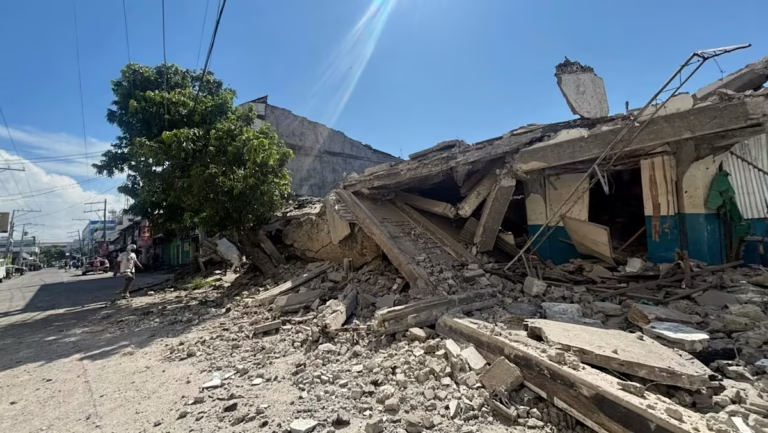
The earthquake caused significant damage to homes, schools, businesses, and public infrastructure. Several buildings suffered structural damage, while some collapsed completely.
Roads and bridges in affected areas have also been impacted, slowing relief efforts and making transportation difficult. Authorities are assessing the extent of the destruction and working to restore essential services.
For many families, the earthquake has resulted in the loss of everything they owned. Personal belongings, family memories, and years of hard work were destroyed within seconds. The emotional impact of such losses can be just as painful as the physical damage.
Tsunami Warnings Added to the Fear
Following the earthquake, tsunami warnings were issued for several coastal areas. Residents living near the shoreline were advised to move to higher ground as a precaution.
The warnings created additional anxiety among communities already dealing with the aftermath of the earthquake. Fortunately, the tsunami threat later eased in many regions, but the fear and uncertainty remained.
Emergency officials continue to monitor coastal conditions and urge residents to follow safety instructions from local authorities.
Families Searching for Loved Ones
One of the most heartbreaking aspects of any natural disaster is the uncertainty faced by families separated during the crisis. Across the affected region, people have been searching hospitals, evacuation centers, and emergency shelters for missing relatives and friends.
Social media platforms have become an important tool for sharing information and reconnecting families. However, for many people, the wait for news about loved ones remains painful and emotionally exhausting.
Parents are looking for children, children are searching for parents, and entire communities are hoping for positive news amid the tragedy.
The Emotional Toll of the Disaster
Beyond the physical destruction, the earthquake has left deep emotional scars. Survivors are dealing with grief, shock, and trauma after witnessing the loss of lives and homes.
Children are among the most vulnerable. Many have experienced fear and confusion, especially after feeling powerful aftershocks. Mental health experts say emotional recovery can take months or even years following a major disaster.
Community leaders and aid organizations are emphasizing the importance of psychological support alongside physical relief efforts.
Global Support and Solidarity
As news of the earthquake spread around the world, messages of sympathy and support began pouring in from governments, humanitarian organizations, and ordinary citizens.
Relief agencies are coordinating efforts to provide emergency supplies, medical assistance, and shelter for displaced families. International support can play a critical role in helping affected communities rebuild and recover.
The disaster serves as a reminder of how quickly lives can change and how important global solidarity becomes during moments of crisis.